
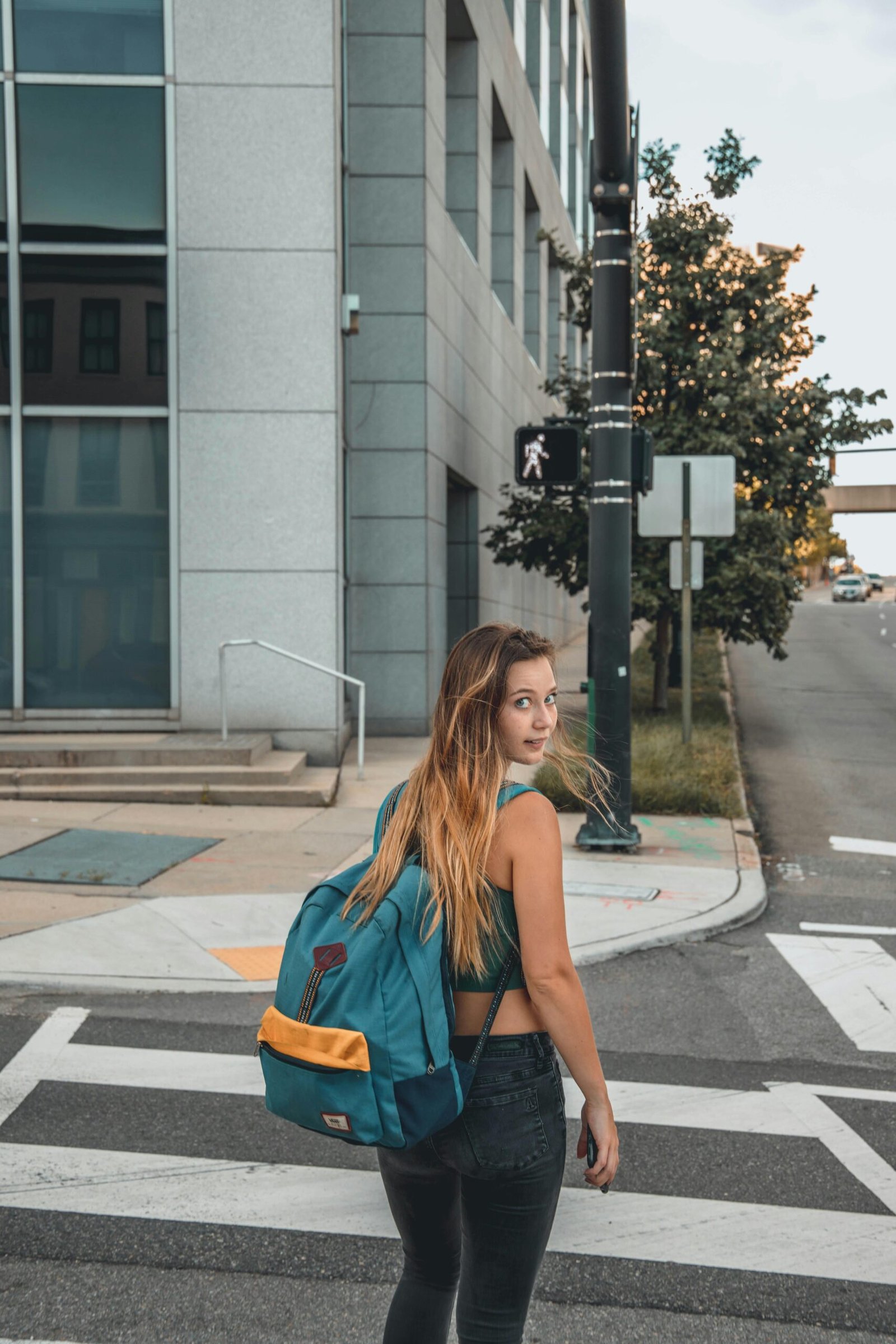
The birth of the backpack: from the fabric to the finished product, the journey of ingenuity is revealed.
Part 1: Design & Pattern Making – The Starting Point of Everything
The birth of every backpack begins with a design sketch, or more precisely, a paper pattern.
Designers define the backpack’s style, capacity, and functions based on market demand and product positioning.
Pattern makers then transform the design into precise paper patterns – the templates for every component: front panel, back panel, side panels, shoulder straps, flap, and more. Each part comes with its own exact shape and size.
Part 2: Material Selection & Testing – Good Bags Start with Quality Materials
Fabric Selection
The fabric defines a backpack’s durability and texture. Common materials include:
- Nylon / Polyester: Lightweight, durable, and water-resistant, the mainstream choice for daily commuting and outdoor backpacks.
- Canvas: Retro texture with good breathability, ideal for casual styles.
- Genuine Leather / PU Leather: Premium texture, often used in fashion-oriented backpacks.
- Waterproof Composite Material: Produced with hot-press molding technology, featuring no stitching holes at joints for fully waterproof performance.
Fabric Testing
Before mass production, all fabrics, accessories, and threads undergo strict physical and chemical tests to ensure they are non-toxic and safe for human use.
Though invisible to customers, this step lays the solid foundation of quality.
Part 3: Cutting – The Art of Precision
Cutting is the first production process: shaping fabrics, linings, and interlinings into individual components following marked guidelines.
In modern factories, hydraulic cutting machines are widely used. Workers stack multiple layers of cloth, and the press cuts dozens or even hundreds of identical parts in one pass using custom dies.
This method is far more efficient than manual cutting and guarantees consistent dimensions.
Part 4: Table-Top Craftsmanship – From Components to Prototype
The table-top process is the most complex and technical stage throughout production, consisting of four key steps:
- SkivingThe edges of each component are carefully thinned to avoid bulky seams and ensure a smooth, refined finish after sewing.
- Edge TreatmentCut pieces receive professional edge finishing: dyeing, folding, binding, piping, and edging.Each procedure enhances both the appearance and durability of the final product.
- GluingFabric, lining, and interlining are bonded together using eco-friendly adhesive, improving the backpack’s stiffness and structural strength.
- Sewing – The Core ProcessSewing is central to backpack manufacturing.In the workshop, sewing machines hum continuously as workers focus on stitching pieces with precision.
Main sewing equipment:
- Flat seamer: For straight seams, relatively easy to operate.
- High-post seamer: For thick materials and special parts, requiring advanced skills.Advanced factories also use computerized sewing machines: workers simply position the fabric, and the machine automatically sews according to preset patterns with high accuracy and efficiency.
Part 5: Final Assembly – Forming the Complete Backpack
Once all components are ready, they move to final assembly.
Workers sew the front, back, side panels, shoulder straps, flap, and other parts together step by step, and the backpack gradually takes shape.
This stage demands exceptional skill and patience.
Hundreds of procedures are completed by dozens of workers in a relay-like workflow. For example, a typical export-brand backpack involves 115 processes, while high-end photography bags can require over 300 steps.
Part 6: Cleaning & Quality Inspection – Final Checks Before Shipment
Finished Product Cleaning
After multiple production stages, backpacks may gather dust, loose threads, or glue marks.
Specialized cleaners carefully restore each backpack to a clean, tidy condition.
Quality Control
Inspectors examine every finished product in detail:
stitch uniformity, zipper smoothness, hardware firmness, seam integrity, and overall workmanship.
Only products that pass every inspection standard are approved for delivery, representing Yanya’s unwavering commitment to quality and trust.








Checkout our new blog post